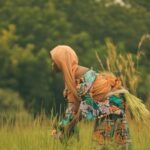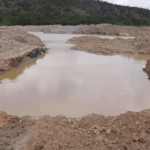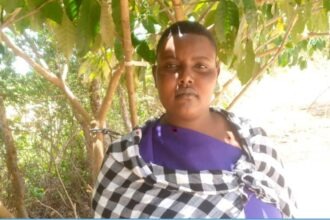



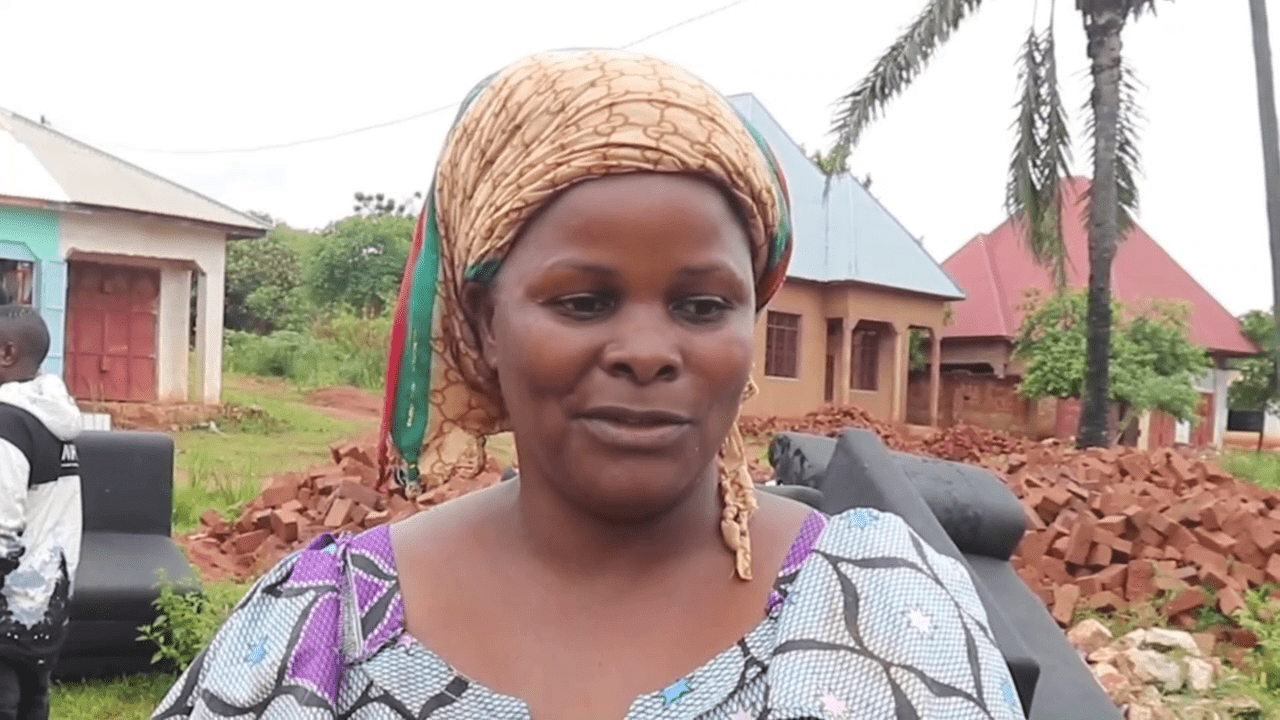
Kigoma, Tanzania – A dawn of relentless rainfall in Burega, Kigoma Ujiji Municipal Council, on Wednesday, December 10, 2025, turned into a terrifying ordeal for resident Upendo Mlary, whose home was severely damaged.
Speaking to Nijuze on the morning of the tragedy, the locals said the heavy rain started around 6am, intensifying to a continuous downpour by 7am. The deluge sent a massive flow of water from Kilimahewa, which then surged over the asphalt road, passed through the Burega market, and rushed inside homes.
Ms. Mlary, a flood victim in Burega, immediately focused on protecting her children and home. “So quickly, what I did because I saw I couldn’t manage those waters alone, I took all the children outside first and took them to the market inside the stalls,” she explained while talking to Nijuze in Burega.
In her attempts to release the water, the house was quickly overwhelmed. “The house was overwhelmed by the weight and the many waters, the bedroom wall collapsed, then the water flowed out,” she added.
The multidimensional burden on women
The loss of a home and property directly translates into an intense, immediate caregiving responsibility, a burden that often falls disproportionately on women in the wake of climate disasters. Ms. Mlary lamented the loss of her family’s security and belongings.
“The damage that occurred is very huge, very much,” she stressed sadly, adding,“ until now as I speak, I don’t know where we will sleep because even the mattresses are all full of water”.
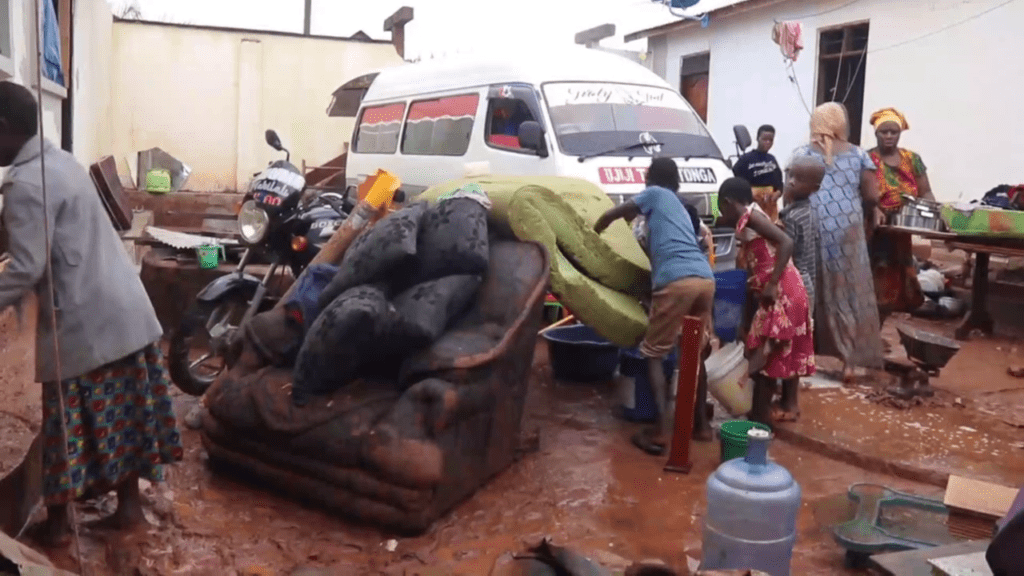
Her neighbor, Erickana Erickad, described the physical danger, stressing that the situation was so bad that it “could have even caused deaths and things like that”. He also detailed the extensive property damage: “As you entered inside you saw water has entered inside, meaning things are soaked, there is a lot of damage that has occurred, until some things have left, we don’t even know where they went”.
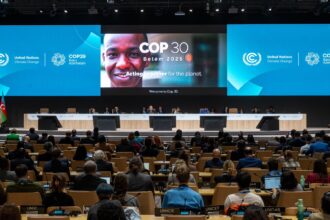
This struggle explains why national policy must consider the specific needs of women. The differentiated impacts of climate change on all women and girls are shaped by multidimensional factors, as acknowledged in the outcomes from COP 30.
Tanzania’s overall challenge is substantial, as extreme weather events are significant enough to “curtail Tanzania from achieving key economic growth, sustainable development, and poverty reduction targets,” according to the Nationally Determined Contribution (NDC).
More Read
Infrastructure blocking natural water passages
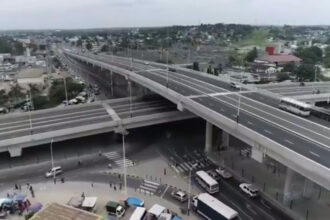
Authorities have linked the flooding to infrastructure failures. Elias Mtapima, the TARURA Manager for Kigoma District, explained in Mji mwema, Kigoma Ujiji Municipal Council, that “These challenges resulted from the construction of road, drainage, and culvert projects being built in Buzebazeba ward and neighbouring wards, a situation which caused the blocking of water passages and brought harm to people’s settlements”.
The Burega area is described in the material as being especially vulnerable because it is located in a valley, a “lowest point”. This geographic reality means that when water reaches there, instead of turning towards where it is supposed to go, it leaves a lot of sand, which when full, causes the water to cross the road and affect the people dwelling in the surroundings.
The lack of essential, flood-resilient infrastructure in Burega is directly compounded by a massive global deficit in climate adaptation funding. Developed nations, which bear the greatest historical responsibility for climate change, had committed under the Glasgow Climate Pact to finance adaptation in developing countries to the tune of US$40 billion per year by 2025.
However, the UNEP’s Adaptation Gap Report 2025 states clearly that “this finance is not coming,” and the goal will likely be missed. International public adaptation finance flows from developed to developing countries actually fell from US$28 billion in 2022 to US$26 billion in 2023. This shortfall is particularly critical given that the estimated adaptation finance needs of developing countries range from US$310 billion to US$365 billion per year by 2035.
Tanzania estimates the total budget for implementing its comprehensive NDC to be USD 19,232,170,000. While global climate action is accelerating across key systems, as noted in the COP 30 Outcomes Report, and its successful delivery relies largely on support from the international community.
Following the damage, Dr. Rashid Chuachua, the Kigoma District Commissioner, stressed a clear directive to contractors.
“And already we have given instructions to the contractor,” he said during his visit to observe the floodwaters aftermath. “That in every area that has a trench in the entire drainage system being built, they must leave space for the water to enter this drain to ensure that the water does not cause harm to people’s settlements and to people’s lives in general”.
More Read

The need for gender-responsive resilience
Tanzania’s overall challenge is substantial, as extreme weather events are significant enough to “curtail Tanzania from achieving key economic growth, sustainable development, and poverty reduction targets,” according to the Nationally Determined Contribution (NDC).
The government’s response is guided by the National Climate Change Response Strategy (2021-2026), which aims to build national resilience. The strategy includes mainstreamed gender considerations to address the vulnerability of women.
This aligns with the international recognition that gender-responsive implementation of climate policy “can enable Parties to raise ambition, as well as enhance gender equality, and just transition of the workforce”.
The immediate engineering solution was laid out by Mr. Mtapima. “Therefore, the solution here is to look into the possibility of increasing the drainage channel on this side,” he told Nijuze. “To see that, we see the possibility of collecting all the water that reaches here so that it can head to safe areas, that is all”.
The failure of developed countries to meet their commitments directly translates into a vulnerability for communities like Ms. Mlary’s, limiting local authorities’ ability to implement the large-scale infrastructure projects necessary for flood protection.
For Upendo Mlary, the need for a permanent, safe drainage system is paramount to prevent future trauma. Her plea to the authorities is specific: “They should help us by putting a drainage channel on the other side because the water coming from Kilimahewa above enters the second drainage channel and comes directly into our areas and enters inside our houses.”
“They should help us put a drainage channel there so that the water can enter the second drainage channel and head to the correct place where it is supposed to go”.
The ultimate test of Tanzania’s climate strategy is its ability to translate national policy into secure, gender-responsive, and flood-free communities for its citizens, a task made harder by the global adaptation finance gap.