

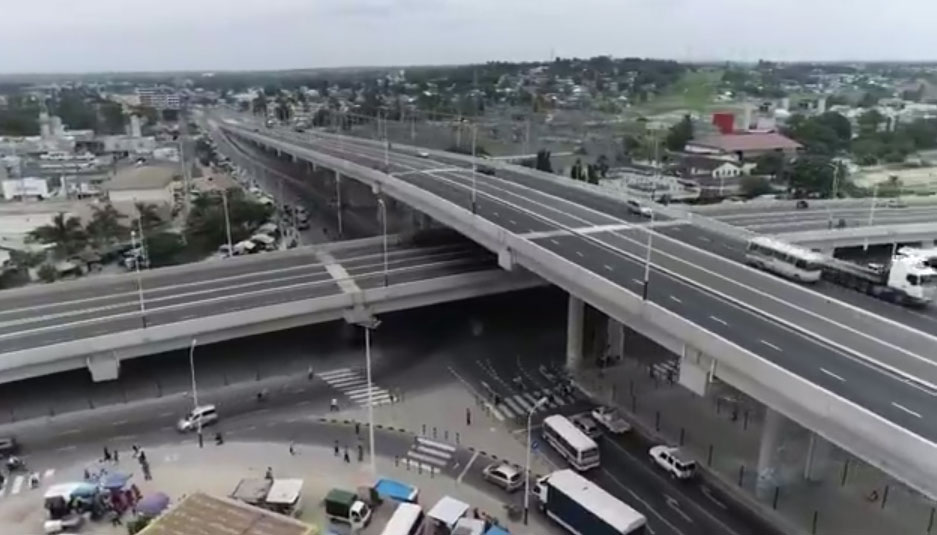
Dar es Salaam — In the shadows of one of Dar es Salaam’s most modern landmarks, a young voice speaks of the heavy price of survival. “We live by begging, but while we beg, they tell us we are thieves,” explains one of the children living at the John Kijazi interchange.
Speaking on the sidelines of the flyover, the child shared the emotional toll of being misunderstood by the public. “It hurts us because we have nowhere else to go to get our needs.”
This reality is born from a breakdown in quality upbringing at home, creating a harsh environment where hundreds of children now depend on the mercy of strangers for their daily bread.
In a city of over six million people, the shadow of the flyover has become a symbolic shelter for those with nowhere else to turn, even as they face constant suspicion from the world above.
The scale of the crisis is immense; According to the 2024 Tanzania Violence Against Children and Youth Survey (VACS), Tanzania is estimated to have over 437,000 children living and working on the streets, with Dar es Salaam serving as the primary hub.
More Read

Fear and dreams behind the concrete
For many, the journey to the concrete pillars of Ubungo began as a desperate escape. Kevin, a young boy who traveled to the city from Singida, told the reporter that he fled home after facing constant caning at school.
“You get beaten even for minor things; if you have a disagreement at school you are beaten, if you didn’t bring water you are beaten… that is what made me quit school altogether,” Kevin said.
Despite the hardships of the street, Kevin is not looking back. He has traded his schoolbooks for a vision of the digital economy.
“My dream now is business; I hope one day to own and run a computer games (PS) business; that will be my liberation,” Kevin emphasized.
His story highlights a quiet tension with the Law of the Child Act of 2009, which prohibits cruel or degrading punishment, yet remains a distant promise for many children facing violence at home or school.
The daily struggle for survival often forces these children into tight-knit groups for mutual protection. Salim Ally, a local resident who observes the children daily, defended their character during an interview with the reporter along the flyover.
“As I know them, they are neither thieves nor troublemakers. Perhaps if you come here and provoke one of them, that is when they unite to help each other,” Ally explained.
The search for sanctuary
Living under a bridge exposes these children to dangers that go far beyond an empty stomach. In early October 2025, rumors of gender-based violence and cruelty against the children sparked fear within the community.
While no direct evidence was confirmed, scholars from the National Institute of Transport (NIT) recently noted that urban well-being is tied to social safety. Their research suggests that factors such as domestic violence continue to drive children into these high-risk environments.
Ayubu Maliki Shemdoe illustrates the extreme physical trauma he had to flee. Ayubu arrived in Dar es Salaam by hitching a ride on a truck from Arusha after his hand was burned with a hot spoon by a guardian. For Ayubu, the flyover is more than a shelter; it is a refuge from the trauma of the past.
“I came to Dar es Salaam by clinging beneath cargo trucks,” Ayubu recounts, describing a perilous journey that spanned hundreds of kilometres. “I was not injured, but I arrived covered in dirt from head to toe.”
The stigma they face—being labeled as criminals—adds a layer of psychological weight to their physical struggle. Without a formal safety net or a path to rehabilitation, they remain trapped in a cycle where they are viewed as a nuisance by the society they are asking for help, further isolating them from any hope of a stable life.
More Read
The long road home
The government has recognized this crisis as a national priority. A budget speech for the 2025/26 financial year in Parliament, the Minister for Community Development, Gender, Women, and Special Groups, Dr. Dorothy Gwajima, noted that between July 2024 and March 2025, the government rescued atleast 8,372 children from the streets. However, she acknowledged that thousands, particularly boys, remain vulnerable.
Social stakeholder Abdallah Omari emphasized that the solution must be more than just moving children off the streets.
“We must identify where every child comes from. The government must follow procedures to return these children to their families,” Omari told the reporter during an interview. He pointed to the MTAKUWWA program, the National Action Plan to End Violence Against Women and Children, as a vital tool for educating parents on the long-term damage caused by harsh physical punishment.
As Dar es Salaam prepares to reach a population of 10 million by 2027 according to the C40 Cities report, the presence of children under the John Kijazi flyover remains a poignant, unresolved challenge.
Their daily struggle reminds the nation that a city’s progress is measured not just by its bridges and highways, but by the strength of the families and systems meant to keep its children safe and at home.