



Nijuze
  • Home
  • News
  • Features
  • Op-Ed
  • Infographics
NijuzeNijuze
Font ResizerAa
Search
  • Home
  • News
  • Features
  • Op-Ed
  • About Us
  • Contacts

Popular Posts

Eu aAA9XEAAjHiQ
News

‘They Call Us Thieves’: The Pain of Children Seeking Refuge Under Ubungo’s Flyover

LISUU BLAHA NJSDJSKK 4
News

Night Vigils and Dry Taps: The Hidden Cost of Dar es Salaam’s Water Crisis for Women

LISUU BLAHA NJSDJSKK 3
News

Trapped in Full-Time Poverty: The Silent Struggle of Tanzania’s Office Cleaners

Welcome to Nijuze News.

Multimedia news platform, delivering in-depth news, analysis, fact-checking, and opinions with a human-interest focus.
Discover
Follow US
© 2026 Nijuze News. All rights reserved.
News

No Fish, No Profit: Mtwara’s Women Pay the Price for a Warming Ocean

Climate change is driving fish scarcity in Mtwara, hitting female traders hard. Adaptation plans exist, but financial shortfalls threaten women’s economic stability.

By Shafii Hamisi - Contributor
Last updated: December 22, 2025
7 Min Read
Share
vlcsnap 2025 12 21 17h30m44s404
SHARE

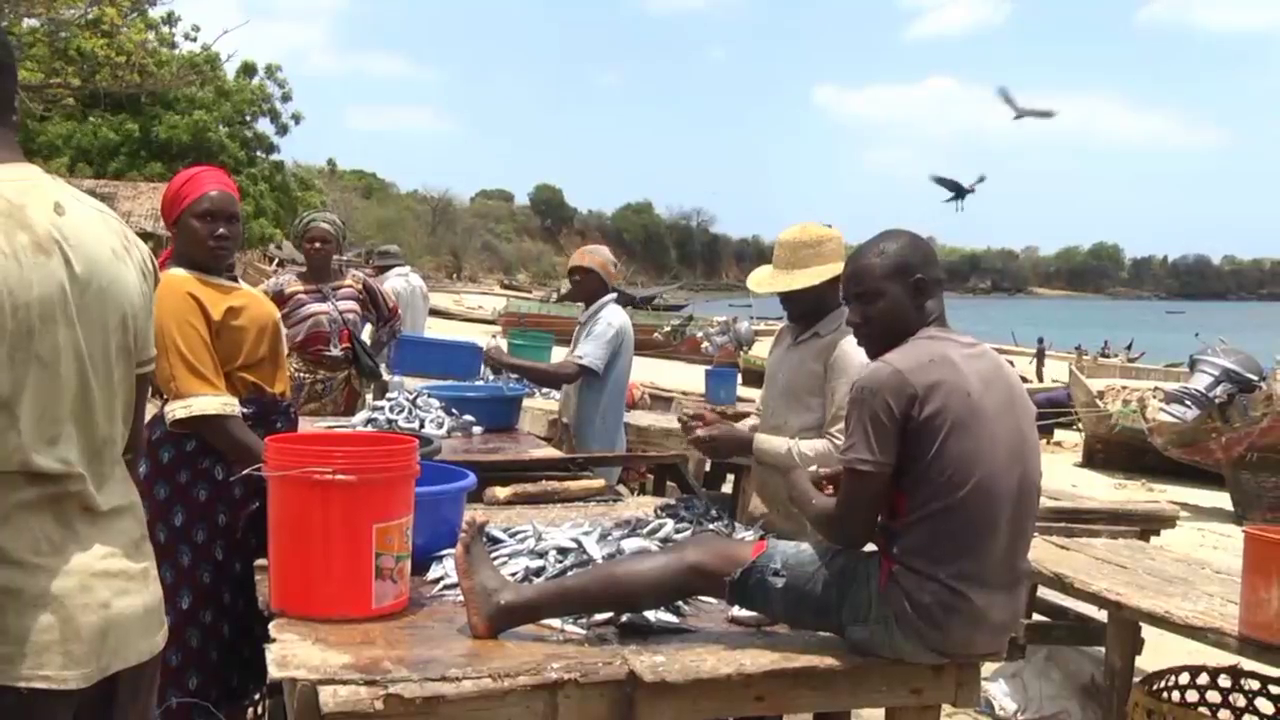
Mtwara – The Mtwara fish market is as loud as ever, filled with the familiar ring of voices and the heat of the midday sun, but the usual piles of kingfish and tuna are missing from the wooden stalls. In this coastal hub, the vibrant energy of the trade masks a deepening crisis: the fish are disappearing, and the women who drive this economy are the ones left to figure out how to fill the gap.

Inside
  • A warming ocean and the call for readiness
  • The household burden
  • Bridging the adaptation gap

For generations, the people of Mtwara have relied on fishing along the vast Indian Ocean as their economic lifeblood, but the ocean is no longer providing what it used to.

When Nijuze visited Mtwara on December 10, 2025, the frustration among residents was clear. Asha Nasoro, who has spent years selling the day’s catch, explained that the ocean simply isn’t providing what it used to. “The availability of fish for me is truly difficult; it has been extremely hard compared to past years,” she said. Ms Asha noted that since the start of 2025, “fish have not been available in abundance.”

This scarcity turns the daily market hustle into a high-stakes gamble. Salma Juma, another vendor navigating the shortage, says the price spikes are eating away at her family’s security. “It affects us because first, money is not available like before,” Ms Salma explained. “Right now, the profit has become smaller than before.”

More Read

INFOGRAPH 1
Infographic: Tanzania’s USD19 Billion Climate Plan Lacks Specific Price Tag for Gender Equality
Tanzania Eyes Climate Finance and Clean Energy Push Ahead of COP30
Wall Collapse, Soaked Mattresses: Kigoma Mother’s Heavy Rain Trauma Highlights Climate Change’s Uneven Burden
CHADEMA Alleges Lawyers Blocked from Meeting Tundu Lissu, Raises Fears Over His Safety

A warming ocean and the call for readiness

The reason the baskets are light is found beneath the surface of the Indian Ocean. Tanzania’s National Climate Change Response Strategy (2021-2026) points to rising sea temperatures that are forcing fish to migrate into deeper, cooler waters, far beyond the reach of local boats. At the same time, coral bleaching and heavy silt from inland rains are destroying the reefs where fish once thrived.
vlcsnap 2025 12 21 17h31m02s881
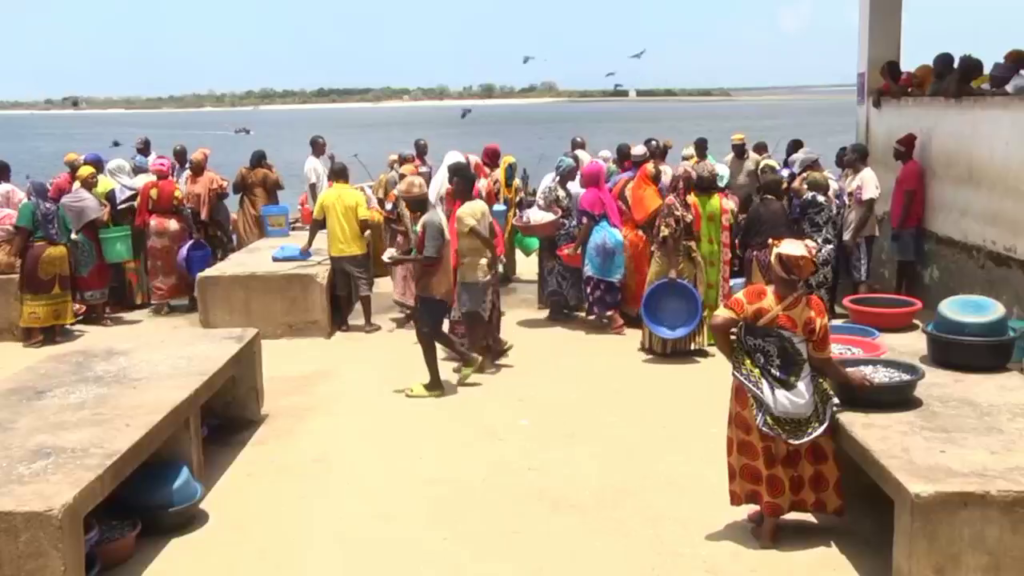
Women fish traders gather at a landing site along the Indian Ocean in Mtwara to purchase the day’s catch from returning fishermen for retail sale in local markets.

Fishermen like Mzee Ali Hassan are already changing how they work to stay safe from the resulting extreme weather. “TMA gives us ‘attention’ early,” he said, referring to the Tanzania Meteorological Authority. “If they know that in the morning the wind will be 50 kilometers per hour, they give us attention that we should not go to sea today… and we do not dispute that.”

This need for constant vigilance was echoed by Prime Minister Mwigulu Nchemba in a national address on December 15, 2025. He urged all Tanzanians to “build a habit of closely following weather forecast reports and observing the advice and instructions provided.”

Reflecting on the gravity of ignoring these warnings, he reminded the country of past tragedies like the “mudslides in Manyara” or floods in valleys where people had built homes. “This time we are warned about the scarcity of rain, that it will not be sufficient and its distribution will be unsatisfactory,” he added, warning that this could hit the country’s harvests.

The household burden

The economic ripple effect of fewer fish lands hardest on women, who the national strategy identifies as the primary managers of household needs. When the fish income dries up, it is the women who must stretch every shilling to cover food and school fees.

Prime Minister Nchemba addressed this domestic pressure directly, urging families to be proactive with their resources. “Despite there being no current threat of food shortages, as a country we have a surplus reserve… we have enough food storage,” the Prime Minister reassured.

On another note, Dr. Nchemba was firm about the need for careful management at home: “It is important that citizens continue to observe proper use of food, including setting aside reserves and avoiding improper usage… it is good that we start storing the food reserve that we have.”

For women in Mtwara, this advice is a daily reality. As they deal with the “empty net” days, they are the ones tasked with the “proper use of food” to ensure their children don’t go hungry when the boats stay docked.

More Read
photo 2025 11 27 09 36 37
Tanzania Police Warn Against Planned December 9 Protests, Calling It a ‘Major Crime’
“Respect Yourselves, You’re Now MPs” — Speaker Zungu Tells Lawmakers as Tanzania Awaits New Prime Minister
‘No One Will Threaten a Voter’: Chalamila Assures Calm Ahead of October 29 Elections
Climate Change Deepens Gender Inequality, Tanzanian Expert Warns as COP30 Opens in Brazil

Bridging the adaptation gap

Tanzania has a plan to fix this. The government’s Nationally Determined Contribution (NDC) outlines a multi-billion-dollar path to a “Blue Economy,” focusing on things like aquaculture, fish farming, and mangrove restoration to bring life back to the coast.

These efforts are supported by international goals like the “Belém gender action plan” from the 30th Conference of Parties kicked off from November 10 to 21 this year in Brazil, which calls for the “full, meaningful, and equal participation” of women in all climate decisions.

The problem, however, is the bill. The Adaptation Gap Report 2025, highlights a massive global shortage of climate funding. Developing countries need hundreds of billions of dollars a year to adapt to these changes, but the money isn’t flowing fast enough.

Until that funding gap is closed, the women of Mtwara will continue to face a warming ocean with little more than their own resilience. As Asha Nasoro and Salma Juma watch the tides, they aren’t just looking for fish—they are looking for a future that is as stable as the markets used to be.


TAGGED:Climate ChangeCOP30Gender
Share This Article
Facebook Email Copy Link Print
ByShafii Hamisi
Contributor
Follow:
Shafii Hamisi is a Creative Lead at The Chanzo and a Multimedia Journalist with a strong focus on human rights, climate change, gender, and social justice.
Previous Article mhagama ‘A Mother and Mentor To Us All’: The Enduring Legacy of Jenista Mhagama
Next Article Copy of Copy of Copy of Copy of Copy of Copy of Copy of Copy of Copy of Copy of Copy of Copy of Copy of Copy of Copy of Copy of Copy of Copy of Copy of QR 14 TZS2.5 Billion Stolen While Kigamboni Commuters Pay the Price for Grounded Ferries
Leave a Comment Leave a Comment

Leave a Reply Cancel reply

Your email address will not be published. Required fields are marked *

Stay informed with Nijuze.

Get the week’s top stories and in-depth features delivered straight to your inbox. Enter your email below and confirm your subscription to start receiving our updates.

HOT NEWS

Eu aAA9XEAAjHiQ
News

‘They Call Us Thieves’: The Pain of Children Seeking Refuge Under Ubungo’s Flyover

January 14, 2026
LISUU BLAHA NJSDJSKK 4

Night Vigils and Dry Taps: The Hidden Cost of Dar es Salaam’s Water Crisis for Women

January 12, 2026
LISUU BLAHA NJSDJSKK 3

Trapped in Full-Time Poverty: The Silent Struggle of Tanzania’s Office Cleaners

January 9, 2026
LISUU BLAHA NJSDJSKK 2

When the Rain Stops, the Violence Begins: How Climate Change Fueled Abuse Against a Simanjiro Daughter

January 6, 2026
Copy of Copy of Copy of Copy of Copy of Copy of Copy of Copy of Copy of Copy of Copy of Copy of Copy of Copy of Copy of Copy of Copy of Copy of Copy of QR 14

TZS2.5 Billion Stolen While Kigamboni Commuters Pay the Price for Grounded Ferries

January 9, 2026
mhagama

‘A Mother and Mentor To Us All’: The Enduring Legacy of Jenista Mhagama

December 12, 2025

You Might Also Like

vlcsnap 2025 10 25 18h35m05s970
News

‘Men Too Are Victims’: Chief Justice Masaju Calls for Broader View on Gender-Based Violence

October 25, 2025
vlcsnap 2025 12 14 15h16m17s719
News

Kigoma Women ‘Struggling’ as Mine Pollution and Drought Intensify Water Crisis

December 14, 2025
Nilitakiwa Kutoa Video Jana Kama Nilivyoahidi lakini Mpenzi wangu WIVU Umemzidi Kanigomea kutoa
News

Marioo Explodes on Instagram: ‘I Spent a Fortune!’ as Paula Blocks Video Release

October 14, 2025
SnapInsta.to 572718333 18516134668071034 1950416508675417174 n
News

Simba SC Seal Historic CAF Champions League Group Stage Spot

October 27, 2025

Follow US: 

Pages

  • Terms and Conditions
  • Privacy Policy
  • Editorial Policy
  • About Us
  • Contact Us

About Nijuze

Multimedia news platform, delivering in-depth news, analysis, fact-checking, and opinions with a human-interest focus. 

© 2026 Nijuze. All rights reserved.
  • Politics
  • Sports
  • Tanzania
  • Africa
  • Climate Change
Welcome Back!

Sign in to your account

Username or Email Address
Password

Lost your password?