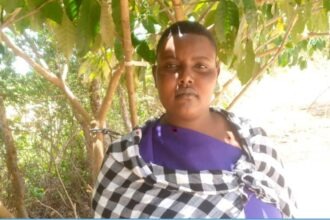


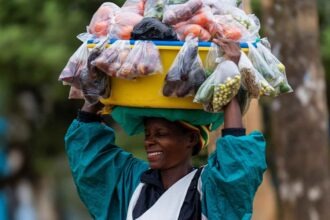
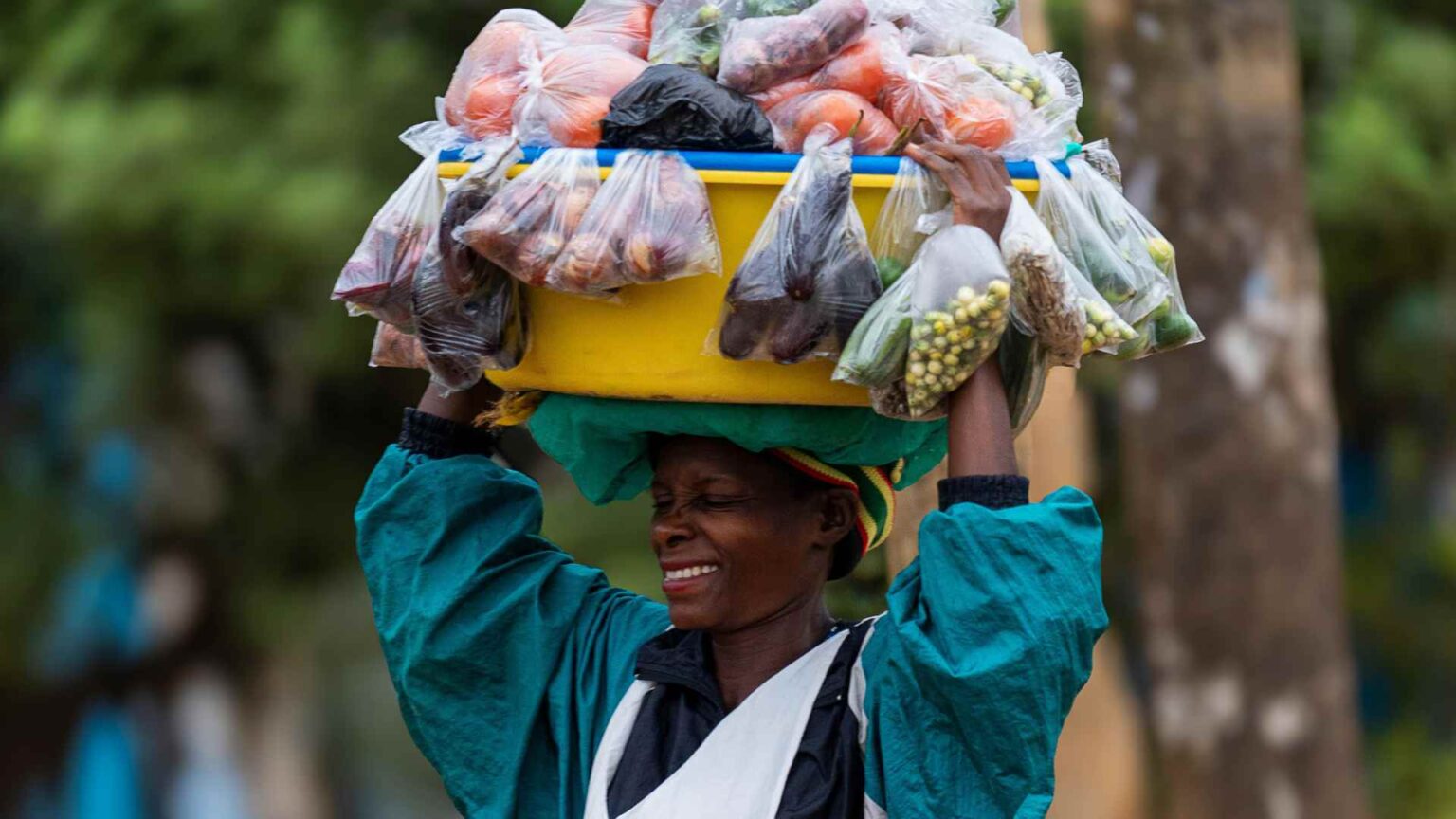
In the busy streets of Banana, Ukonga, Majumba Sita, and Kipunguni B in Dar es Salaam, many women work daily to earn an honest living. Among them is Frida Fungutilo, known to her community as Mama Charles, who has chosen to support her family by selling vegetables door-to-door.
Every morning, Frida begins her route carrying a heavy load of greens, including sweet potato leaves, spinach, kale, black nightshade, and pumpkin leaves. She avoids waiting for customers at a fixed market stall, choosing instead to walk through the neighborhoods to reach her clients directly at their homes.
This individual struggle is the heartbeat of a massive national engine. The Tanzania SME Development Research Survey 2024–2030 by TICGL shows that small and medium enterprises (SMEs), including “mama mboga” and street vendors, contribute between 27% and 35% of Tanzania’s GDP. With over 5 million people—mostly women—employed in this sector, the nation’s economic stability rests on the shoulders of women like Frida.
Survival in a competitive market
Speaking to our reporter, Frida explained that her decision to walk door-to-door is driven by the difficulty of the current market.
She noted that staying in one location often resulted in no sales at all. “I do this work with great difficulty, but I have no other choice,” Frida said. “If I sit in one place to sell, many times I can end up with nothing. That is why I choose to walk with vegetables to homes so I can get at least a little something to help us survive”.
As a mother of two, the stakes are high, as her children depend entirely on her for their daily needs. Frida stressed that the income from her mobile business is what provides food and covers other basic household expenses.
The hardest part of her job is often the emotional exhaustion caused by the “bad habits” she encounters on the streets. To keep her business moving, she often provides goods on credit, only to be met with avoidance.
“The bad habits we encounter in the street is people borrowing without paying,” Frida explained. “Sometimes a person borrows vegetables worth only five hundred shillings, but you have to claim it for a whole week. This situation is very discouraging.” She noted that she performs her work with great difficulty because she has no other choice to sustain her household. These tiny, unpaid debts are not just inconveniences; they are direct threats to the food on her children’s table.”
More Read

Assaulted in the shadows
The dangers of this informal trade often turn physical. Frida recalled a harrowing evening when, after a full day of labor, she was cornered in an alleyway. Attackers beat her and robbed her of the meager earnings she had worked all day to collect.
“There was a day I was returning home after the hardships of the whole day. On the way, I met people in an alley who robbed me of the little money I had and they beat me as well,” Frida recalled. “When I reached home, I returned empty-handed. I cried a lot that day.”
Highlighting the systemic nature of these attacks and the specific risks these women face, Dr. Rose Reuben, the Director of the Tanzania Media Women’s Association (TAMWA), noted that vegetable vendors frequently face gender-based violence, including physical assault, theft, and “shameful attacks”.
“They face many challenges including having their money stolen and serious concerns for their personal safety as they must wake up at dawn to pursue their business.” Dr Rose explained. “Because of these safety risks to themselves and their families, we have provided them with education on protecting themselves against gender-based violence.”
During a month dedicated to celebrating women globally, TAMWA met with these small-scale entrepreneurs to provide education on how to protect themselves and their families from such acts of violence. Dr. Rose also acknowledged the support of CRDB Bank in providing capital to these entrepreneurs.
More Read
Empowering the informal sector
To address the lack of resources, the CRDB Foundation has been involved in providing financial literacy to women like Frida. Joshua Mwakalongo, the Training and Management Manager from CRDB Foundation, explained that the institution has been providing financial education to help these women manage their businesses and access capital.
“Through that training, women gain an understanding of how to use financial services, join groups, and obtain capital or loans that will enable them to grow their businesses.” Mwakalongo stated regarding the impact of this support. “The goal is to enable these women to improve their income, meet family needs, and ultimately liberate themselves economically”.
However, as local leaders point out, education must be met with safety. Highlighting the urgent needs of these women, the Social Welfare Officer for the Kipunguni B Ward, Mr. Gidion Mushi, said:
“Many women doing small businesses like ‘mama mboga’ struggle a lot to ensure their families survive. It is important for the society, local leaders, and various stakeholders to support them by providing a safe environment to conduct business and also helping them access capital and business education”.
Without a secure environment and community respect, the women who carry a significant portion of the economy will continue to walk in fear. Frida’s story remains a reminder of the unresolved need to protect the “malkia” of Tanzania as they seek their daily bread.