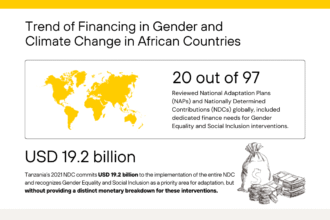


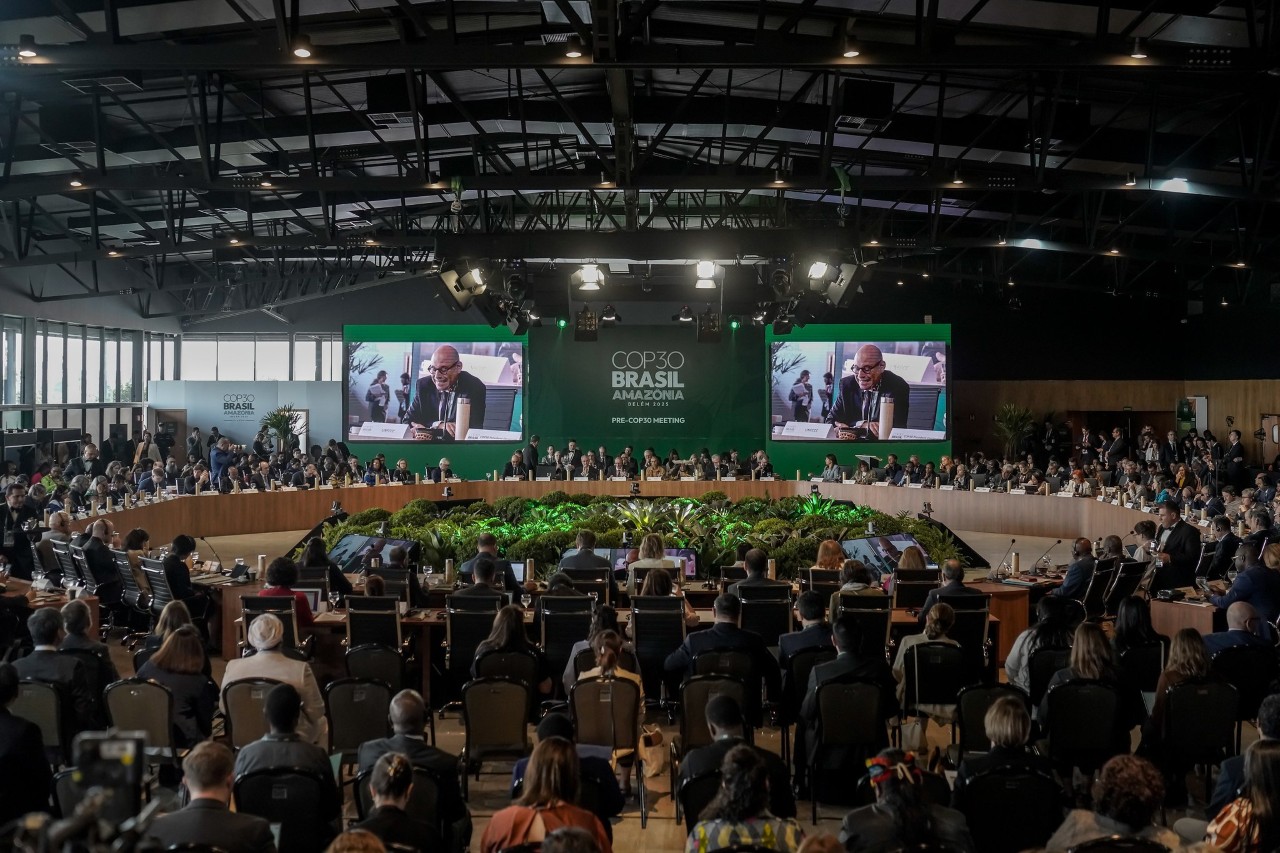
Belem, Brazil — Inside the COP30 venue, disagreements over climate finance may seem like routine political strategy. But for thousands of women across rural Tanzania, these delays are worsening the struggle for daily survival. As negotiations on the “Belem Action Mechanism” (BAM) stall, civil society groups warn that the lack of immediate, grant-based finance is pushing already vulnerable communities closer to the edge.
Tanzania’s National Climate Change Response Strategy (NCCRS) 2021–2026 shows how deeply unequal the impacts have become. Women, children, and pastoralist communities are confronting escalating threats to their livelihoods, safety, and health—while the decisions affecting them are debated thousands of miles away.
A crisis of daily survival
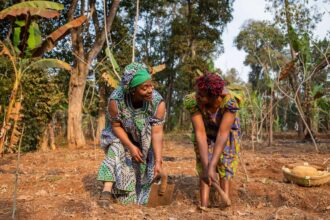
The failure to secure meaningful support at COP30 falls hardest on agriculture, which employs around 58% of Tanzanians according to the NCCRS. Women dominate this sector, so unpredictable rainfall and long droughts translate directly into heavier labor, reduced yields, and shrinking incomes.
Water scarcity has become especially punishing. As shallow wells and seasonal rivers dry up, women must walk far longer distances to find water. What was once a routine task has turned into hours of exhausting travel, often in dangerous conditions. Meanwhile, the NCCRS notes that many men are migrating to cities as farming, fishing, and livestock keeping become less viable. Women are left carrying nearly all household and agricultural responsibilities—a situation the strategy links to rising incidents of Gender-Based Violence (GBV).
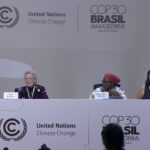
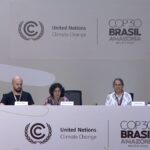
At a CAN International press conference on November 21, 2025, in Belem, Mohamed Adow, Founder and Director of Power Shift Africa, underscored the urgency communities are facing.
“Now instead of getting concrete commitment from Belem, developing countries and particularly the most vulnerable of them are being forced to host ambition, to reduce ambitions with saving lives and livelihoods,” he said. “I want to say loudly and clearly, our lives are not up for horse trading.”
More Read
Health risks for the vulnerable
The uncertainty criticized at COP30 also affects health systems already strained by climate-driven disease patterns. NCCRS data shows malaria expanding into highland areas like Kilimanjaro and Iringa, where it was once rare.
This shift is especially dangerous for pregnant women—who the strategy notes are four times more likely to suffer from malaria—and for children under five, who remain the most affected. Without the dedicated, grant-based finance envisioned under BAM, Tanzania cannot adequately strengthen health facilities or improve early warning systems needed to respond to these outbreaks.
Speaking at the same press conference, Tasneem Essop, Executive Director at Climate Action Network, said the draft text so far fails to match the scale of the crisis.
“We have a whole lot of proposals to have a whole lot of dialogues again. We have proposals to have more work programs. We have proposals to have roadmaps. All of which do not have any substance,” she said. “Are we fighting for the hot air and where things go to die, or are we fighting for real substantial outcomes that deals with justice?”
Demanding a seat at the table
Civil society groups argue that any “Just Transition” must reflect the lived experiences of communities like those in Tanzania. The proposed BAM is meant to coordinate more inclusive, rights-based support—something long overdue. Pastoralist communities, for example, remain disproportionately affected. In Arusha, more than 700,000 livestock were lost during the 2009/2010 drought, a devastating blow that erased livelihoods and destabilized local economies.
During the same event at Belem, Anabella Rosemberg, Senior Advisor on Just Transition at Climate Action Network International, emphasized how consistently these communities have been sidelined.
“For the past 30 years, 30 COPs, workers and communities have been just a footnote of this process. And we are living the consequences of that treatment,” she said. “The text right now agrees to develop a just transition mechanism grounded in rights, in inclusion, to support all the countries and communities that want to make just transition happen.”
For Tanzanian women who spend hours walking for water, tending fields alone, or facing heightened risks of violence, the “roadmap” currently on the table is far from sufficient. Unless wealthy nations unlock real financing for the Belem Action Mechanism, the weight of the climate crisis will continue falling hardest on those least able to bear it.