


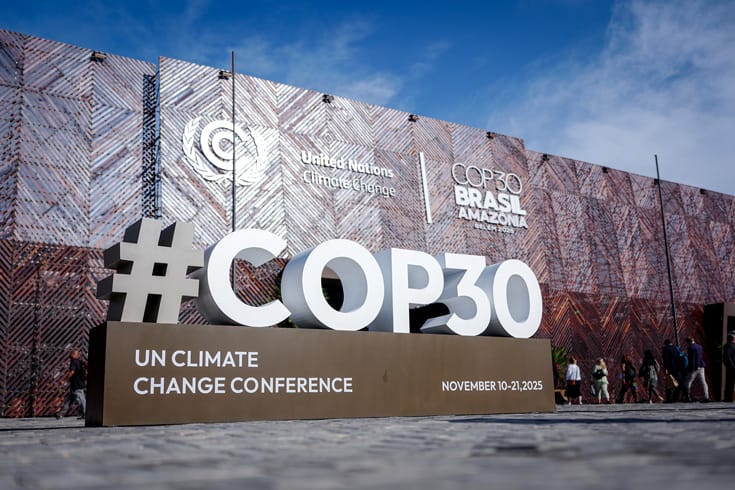
On the sidelines of COP30 in Belém, the voices of women rose with a kind of clarity that statistics alone could never provide. Yet those statistics — especially those in the UNEP Adaptation Gap Report 2025 — form the hard, numerical backbone of the fear, exhaustion, and quiet defiance these women described.
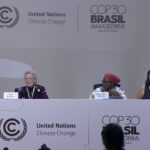
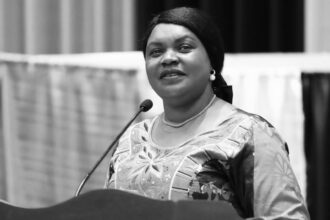
Speaking during the Women on the Frontlines of Climate Action press conference at COP30 on November 18, Zukiswa White said: “Ten years after Paris, African women are still waiting for justice. But we are done waiting, and we’re certainly done being polite about a system designed to fail us.” She went on bluntly, “Let me be clear: we are watching famine, displacement, and extractive violence unfold in real time, and the climate finance structures being negotiated here are not built to save our lives, they are built to save markets.”
Inside a packed press briefing room, the debate shifted from charts and figures to human realities as speakers delivered raw, unfiltered accounts of crises unfolding beyond the negotiation halls — and why closing the adaptation finance gap is an urgent matter of survival.
“Sudan is experiencing famine… and it’s been erased from the agenda.”
“Sudan is experiencing famine, the worst humanitarian crisis,” Zukiswa White opened with a blunt reminder. She went on explaining about the conditions in Sudan, “21 million people facing acute food insecurity, over half a million children dead from malnutrition. Climate-induced drought has intensified resource conflicts that have displaced 14 million people, most of them women and children.”
White’s next point cut directly into the tension between the global energy transition and its hidden costs. Drawing attention to the Democratic Republic of Congo, she said negotiators were ignoring the “extractive violence” occurring in the name of a greener future:
“Right now, children as young as five are working in cobalt mines in the Democratic Republic of Congo so that the global north can drive electric vehicles and call it climate action. The DRC produces 70% of the world’s cobalt. The mining sector, however, contributes less than 1% to its GDP.”
Her statements echoed what the AGR warns about: adaptation challenges worsen where inequality, exploitation and weak governance intersect.
“Five trillion isn’t a dream. It’s a debt owed.”
Osprey Orielle Lake, who leads the Women’s Earth and Climate Action Network, described a painful imbalance between women’s frontline leadership and the financing they receive.
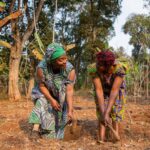
“Women are performing the labor of climate survival every day — they plant crops in failing soils, they walk farther for water, they rebuild after floods, they carry their families through crises,” she explained during a press conference at COP30. “But the truth is, they are doing all of this with almost no financial support. Only 4% of official development assistance has gender equality as a primary goal. How do we build resilience when the people who hold communities together are almost entirely unfunded?” she said, her voice steady but unmistakably frustrated.
UNEP’s findings reinforce that gap. Even as needs skyrocket, adaptation finance to developing countries has dropped by 15% — the steepest reduction in a decade.
“Last year at COP29, the world’s richest countries failed once again to meet their obligations. They pledged only $300 billion in annual climate finance when experts, economists, and communities on the front lines have made it clear we need at least $5 trillion a year to confront this crisis.”
“In 2025, NATO spending is projected to surpass $1.5 trillion,” as she contrasted this with global spending patterns that dwarf climate budgets. “Meanwhile, fossil fuel subsidies continue to drain $331 billion a year in destruction.”
Lake also pointed to legal clarity emerging from the world’s top courts, noting that international advisory opinions now affirm the responsibility of wealthier nations to support climate action. “Climate finance is not aid,” she said. “It’s reparations. It’s justice.”
“Every decision here is based on how they can make money.”
Casey Camp-Horinek, an Indigenous leader and Councilwoman for the Ponca Nation of Oklahoma, speaking in solidarity with all women around the world, captured the emotional dimension of this injustice.
“And if all of the people who are here were thinking about the generations to come—rather than themselves and lining their own pockets by embracing false solutions like carbon trading, carbon sequestration, and all of the things you mentioned—then we could be looking at a true path forward,” she said.
“That path would be one of phasing out fossil fuels and making a just transition without once again invading our territories, exploiting our lands, and committing violence through man camps and the same abuses that have been happening for over 500 years under the banner of greed because every decision has been based on how they can make money from this situation.” she added.
From cobalt mines in the DRC to drought-stricken fields across East Africa, women see clearly what COP30 negotiators sometimes refuse to name: a climate finance system where the richest polluters shape the terms, while those living the crisis are expected to adapt with scraps.
White’s remarks echoed this devastating experience: “African women bear the weight of the crisis we did not create,” she said, capturing this contradiction in a single breath. “African women carry the triple burden — climate impacts we didn’t cause, extractive violence in our communities, and unpaid care work holding everything together while our governments negotiate away our sovereignty.”
Casey’s closing appeal turned the press conference into a collective demand:
“We eat, drink and breathe nature. We who live on the front lines have done this for centuries. It’s time for everyone everywhere to step up. Demand climate justice — demand it now!”
Why their warnings matter
The Adaptation Gap Report shows that developing countries will need US$215–387 billion every single year by 2030 just to protect their people from escalating climate hazards. Current international public adaptation finance falls short by a factor of 10 to 18 — meaning the world is delivering only a fraction of what is required. AGR2025
Africa’s specific numbers are more alarming. The report estimates that African countries already face annual adaptation costs of US$7–15 billion, a figure expected to rise steadily to US$50 billion per year by 2050.
In Tanzania, where women carry water longer distances during droughts, rebuild after seasonal floods, and feed families through rising food prices, the promises of climate finance feel increasingly hollow. They hear world leaders speak of resilience, but read UNEP’s warning that resources remain insufficient. They experience climate loss firsthand, but watch global commitments stall.
If adaptation finance continues to rise slower than climate impacts, the gap will not only remain — it will become the defining feature of climate injustice in Africa.
Looking ahead
As COP30 is coming to a close, African women are asking a question the 2025 Adaptation Gap Report cannot answer: If governments know what adaptation costs, and women know what adaptation requires, why does the finance still fall so catastrophically short?